
Behind the Photograph
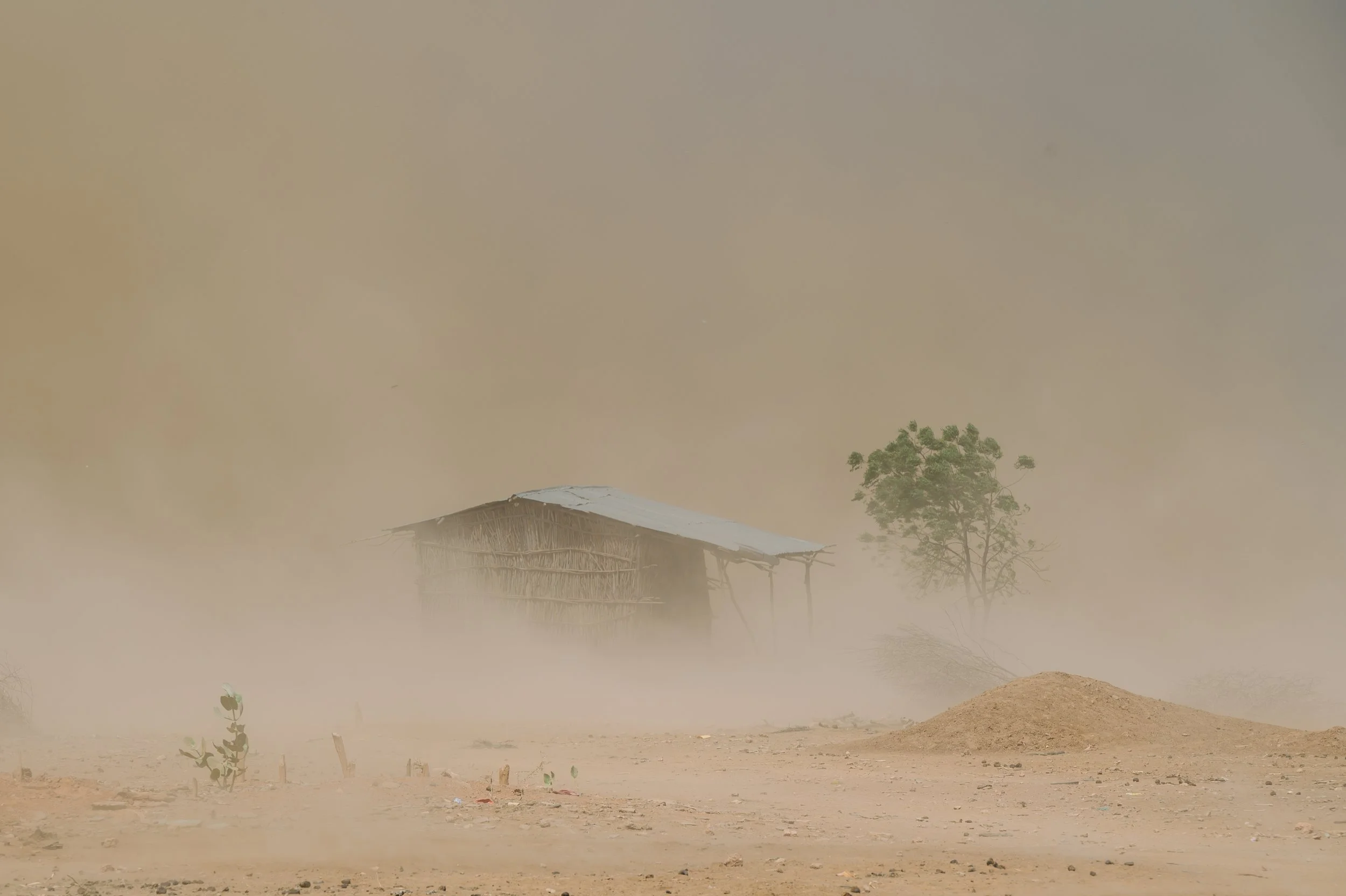
Dust engulfs a home and tree barely visible made worse amid a drought on Friday Jan. 9, 2026, in Sanqotor, Ethiopia.
This photograph is part of a greater body of work. In January 2026 I joined a team of researchers in eastern Ethiopia uncovering the story of myrrh. The work explored the ecological health of the trees which the precious resin comes from, the first hand experiences of the communities which harvest myrrh and rely on it economically, and the opaque supply chain by which the material travels from remote communities out of the country.
This is the image I had been searching for since we first entered the Somali Region, Ethiopia's easternmost province. Almost from the moment we left Jigjiga, the northern capital, we watched tornadoes of dust rise in the distance — enormous, inevitable, the kind of thing that makes you think of desperate eras and desperate lands.
It was fascinating and devastating in equal measure, watching the soil simply lift up and vanish. The region is arid even in good times. But these storms speak to something deeper — the topsoil and nutrients long ago surrendered, life made harder for the pastoralist and agro-pastoralist communities, who have lived here for millennia. When we were there the Horn of Africa was enduring a historic drought. Deyr — the critical second rains that should have arrived in November and December — had simply not come, after years of failed rains.
I had wanted to get close to one of these storms, close enough to feel what the people living here feel in the absence of easy access to water. And I didn't have to go looking for it. We were in Sanqotor village, sitting over coffee before leaving after our second day in the community. Sanqotor was holding on better than most — their livestock well was still full, and they had a separate water catchment for people, both within the village itself. Earlier I photographed the flood of herders, some having walked 200 kilometers to water their animals. In pastoralist society, livestock are a living, breathing bank account. Their loss is not just economic — it threatens the survival of entire families.
But for that moment we were sitting on low stools, drinking buna on the porch of the coffee stand. Ethiopian coffee, whether in a fancy cafe in Addis or a mud-and-stick stand at the edge of the eastern border, is the best coffee I have ever tasted. Still, on assignment I am rarely still for long as I am always watching, reading the light and looking for images.
The storm came from my right — a wave of beige erasing everything in its path. I raised my camera with one hand and shielded my eyes with the other, firing about twelve frames as the wall of grit swallowed the village, and us with it. After those dozen frames I could no longer keep my eyes open as the abrasive material covered everything. I bowed my head, pulling my hijab over my face and camera. The storm passed quickly, but the dust coated everything. When I looked up, my team on the porch had red eyes and their clothes were coated. We shook out our scarves — the women managing as best we could without uncovering our hair — and dusted ourselves off. We wore hijabs throughout this Muslim region, and beneath mine I also kept a bandanna wrapped tight, to keep dust out as showers were understandably rare.
I cannot say why but the dust was light and when you walked on it, it blew up around your shoes as if unclaimed by gravity. It was impossible to imagine that this material would provide any nutrients to plants. And our clothes took on a red coating that bucket washing was never able to remove. It is hard to imagine storms like this being an every day occurrence. But I suppose to these communities our tolerance of winter and snow is equally unfathomable.
Moments like this fascinate me. As humans we share so much; a desire to be safe, to have access to food and water, the ability to advance ourselves, for love, and for our family to be ok. And yet, because of geography, we also have external trappings that are so wildly different. The juxtaposition of these two things, familiar and unfamiliar, is one of the elements I love most about my work.
To view the full photo story which was published in the Associated Press