

Sarah overcomes the Odds, Union, Missouri
Sarah Carroll, 49, enjoys her job in the pack line at a factory in Union, Mo. The work suits her temperament, always in motion, unless she’s resting on the couch after work. But factories in the US have been struggling for a long time, and like most, hers is struggling even more under the new tariffs.
By her own admission, she’s had a “tough life”, with an abusive husband, addiction, alcoholism and a series of strokes. After her husband passed away in 2022, she started dating Mike, “a good man,” who she has known since she was a teen. Last year they bought a house, and she lives with Mike, his son Ethan, daughter Kayle, Kayle’s boyfriend Noah, and Kayle’s daughter Atlas, to whom Sarah is Grandma. Sarah’s own daughter, who is her best friend, and grandchildren, live not too far away.
Mike, who works construction with Noah and Ethan, is connected within the Union community in a way that is new and wonderful to Sarah. While they feel the sting of the recent rise in cost of living, for example now they only drink coffee on Saturday and Sunday now, but they have a good life.
Sarah never thoughts she’d live this long and is grateful. With Mike, her expanded family, beloved pets, and job she feels she’s finally free.
Many thanks to the Missouri Photography Workshop team, staff, and our editors, Gabrielle Lurie and Randy Olsen
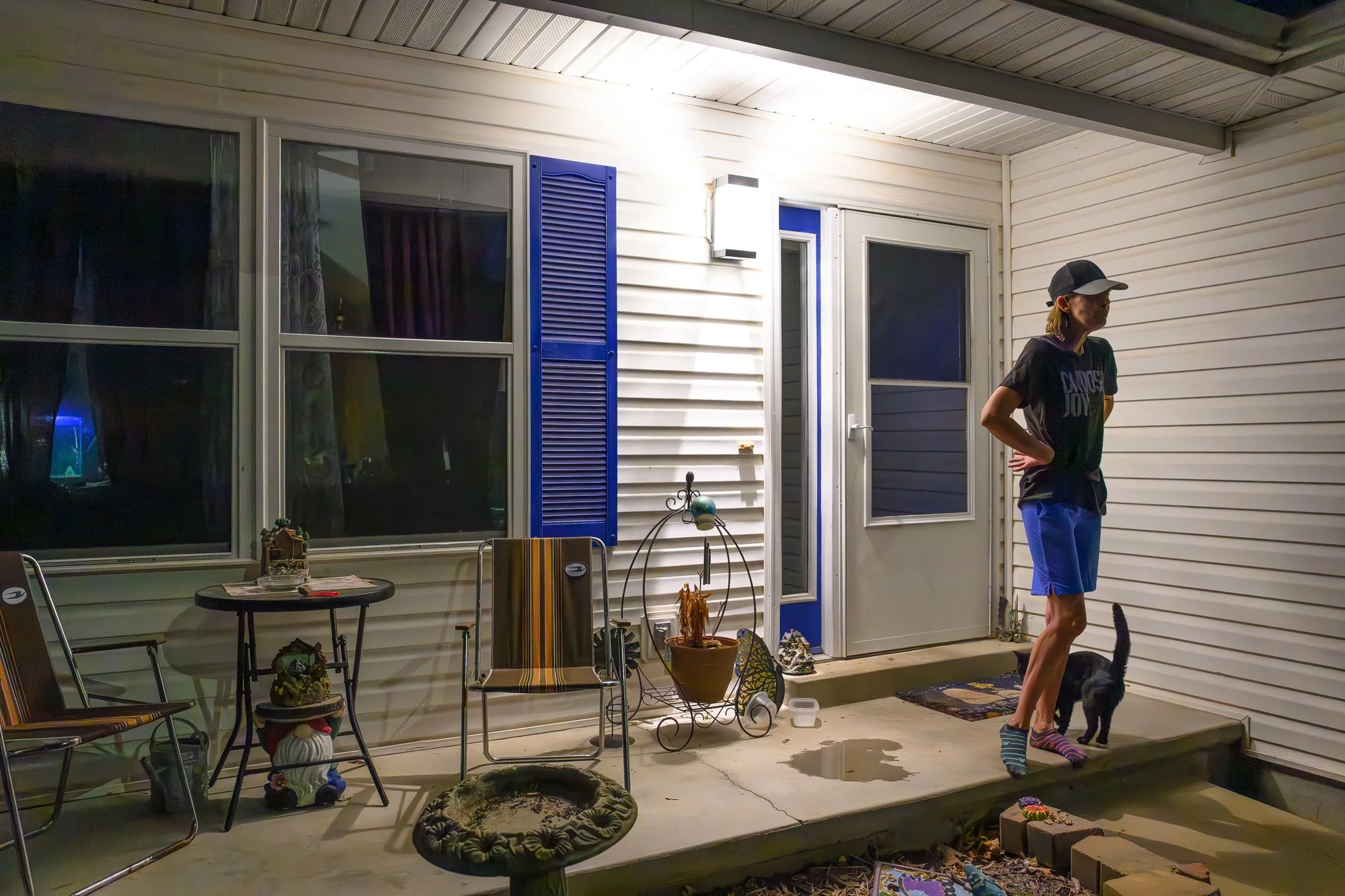
Sarah Carrol lets her dogs out before going to work, while Bagheera the cat stays at her feet. Her boyfriend, Mike Carylon, who she lives with drops her off at her factory job in Union, Mo before going to his construction job as she can't drive since having a series of strokes.
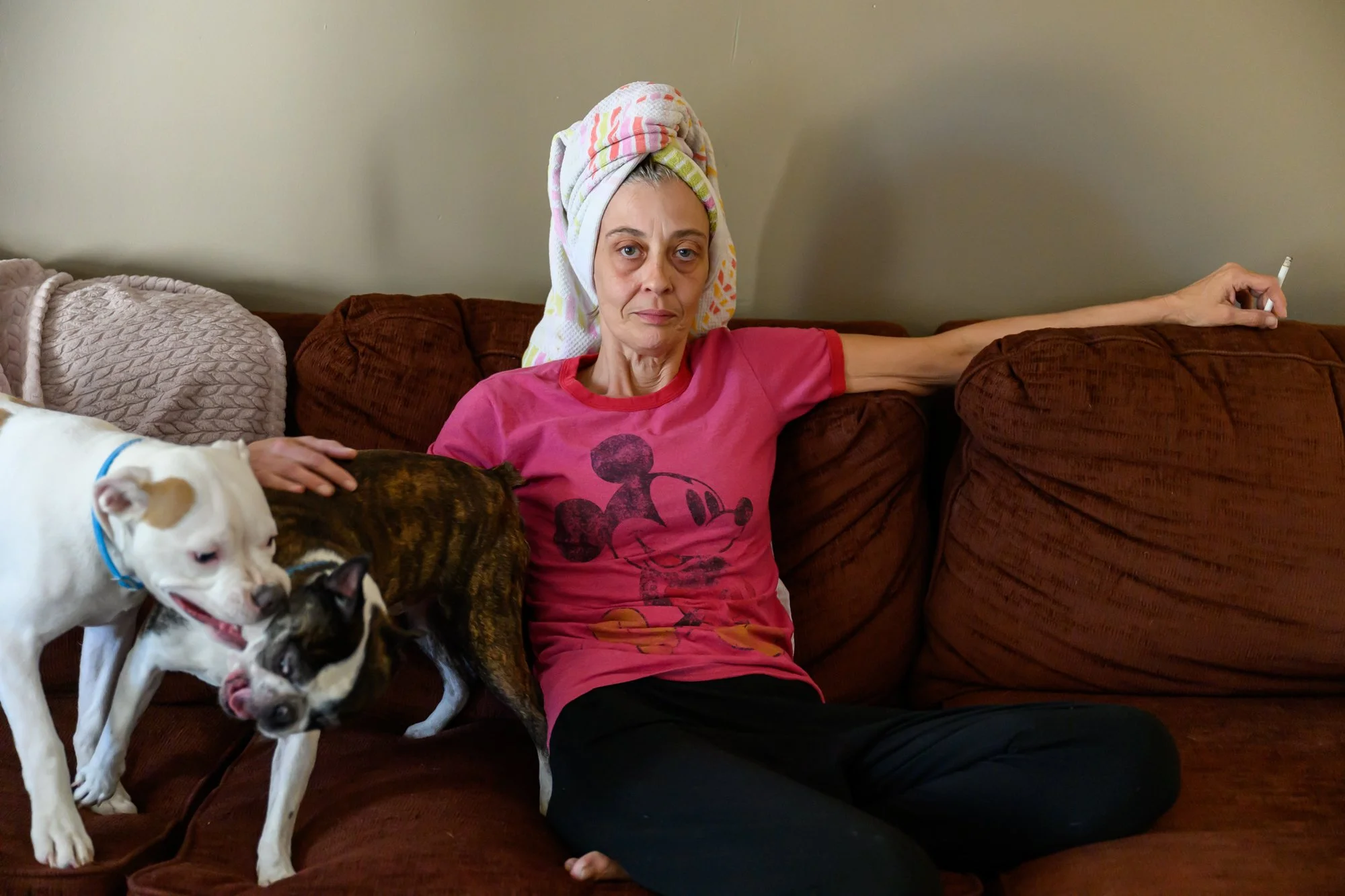
At work Sarah is always in motion, but at home she finally sits down and relaxes, when she isn't babysitting Atlas, her boyfriend Mike’s granddaughter. From the outside her life may not look like much but she has found a place, a job and people where she is safe, supported, has meaningful work and happy.

The computers and box making machine on the pack line in the production department are Sarah Carrol’s workstation at the factory, although workers move departments when work is slow. She truly enjoys her job at the Children’s Factory. Her late husband was abusive after a traumatic brain injury and would not allow her to work in a factory.
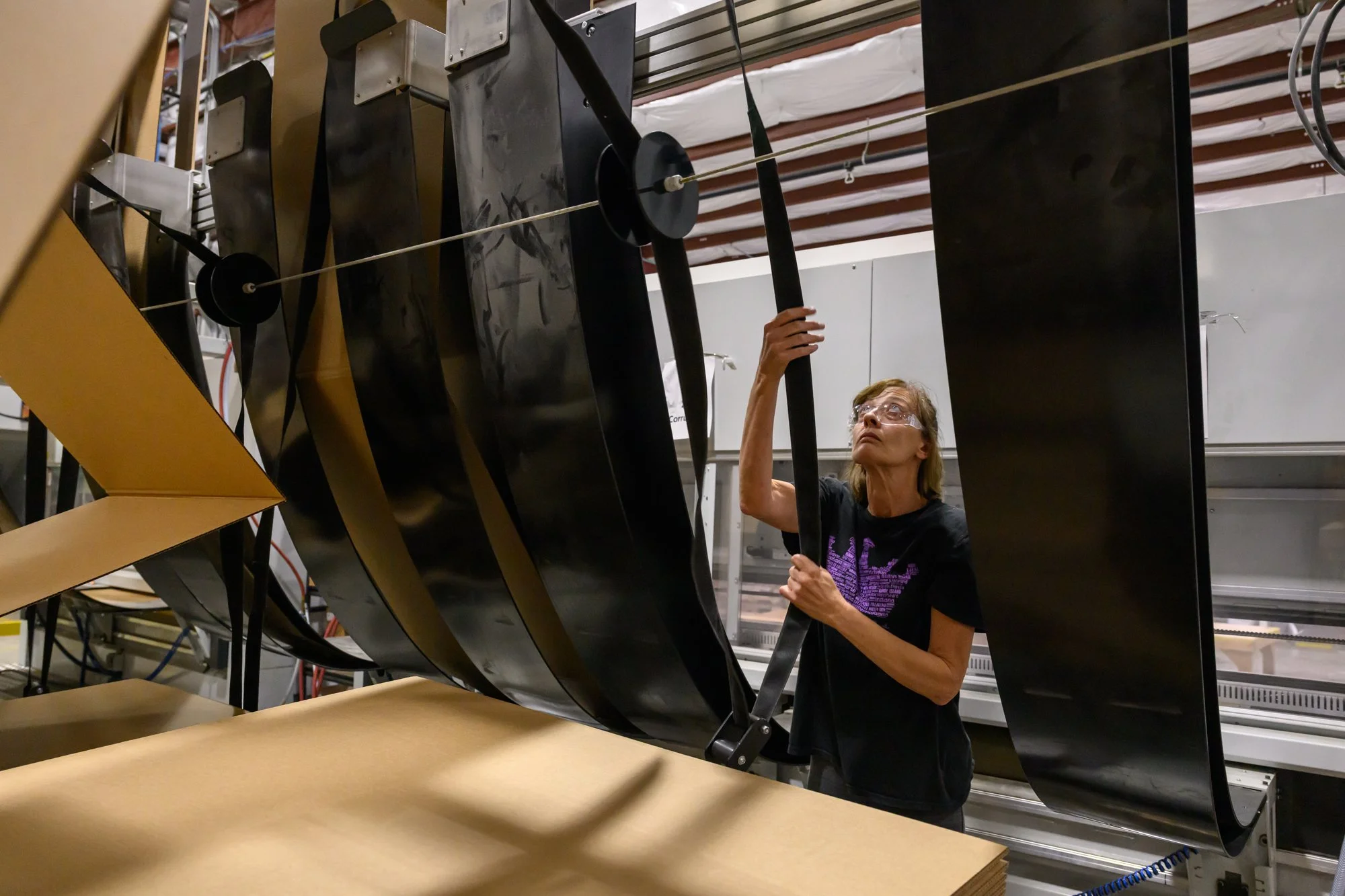
Even with technology, Sarah Carrol’s job is extremely labor intensive, hauling, lifting and moving material.
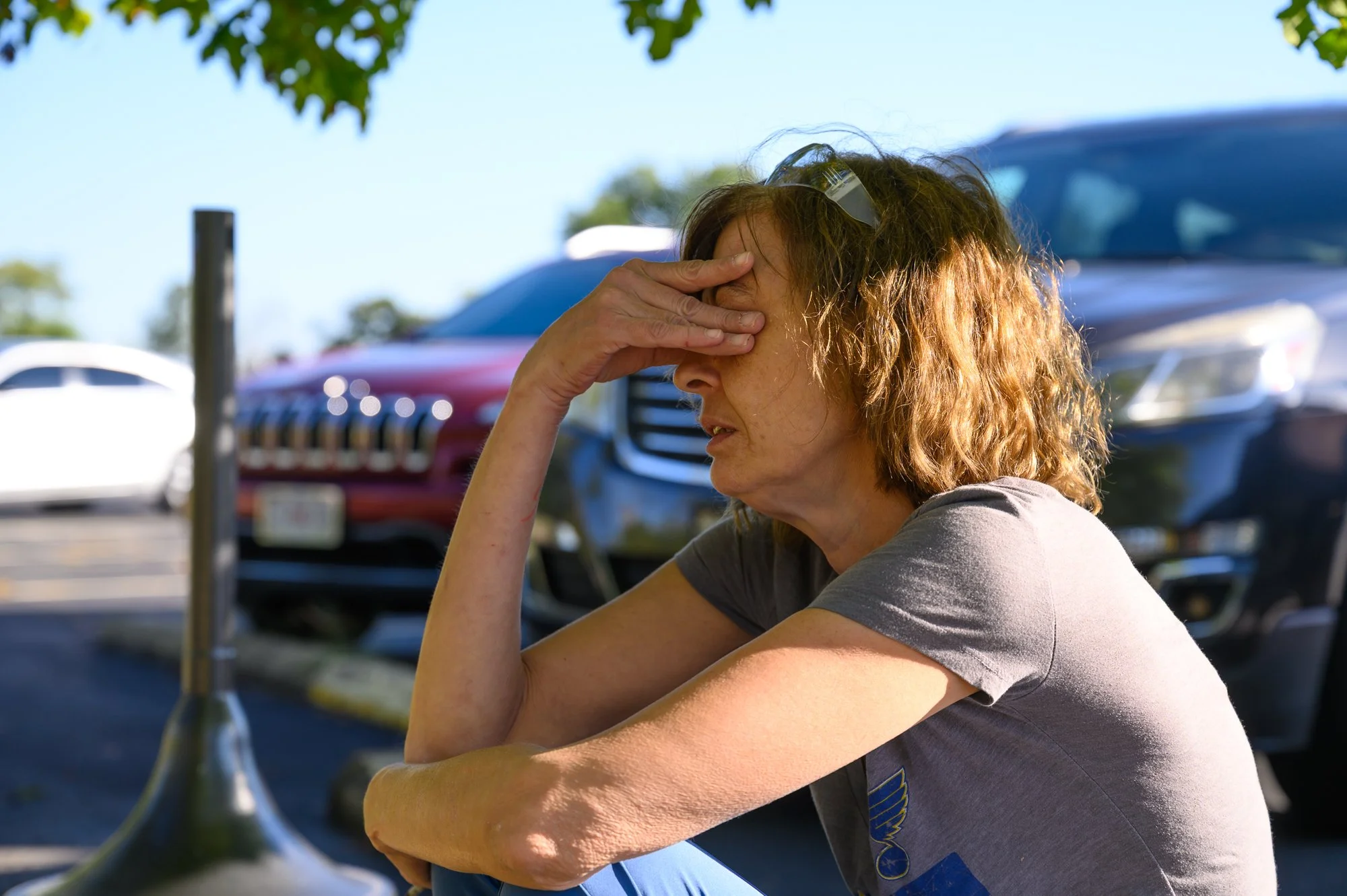
In the parking lot outside the factory, Sarah takes a beat on her morning break. Her machine has been printing out the wrong shapes and with the recent layoffs including some of the IT team no one could come help and she got locked out of her computer terminal. While she isn't paid by her production, efficiency does matter in job assessment, and maybe more importantly she is proud that she is good at her job.
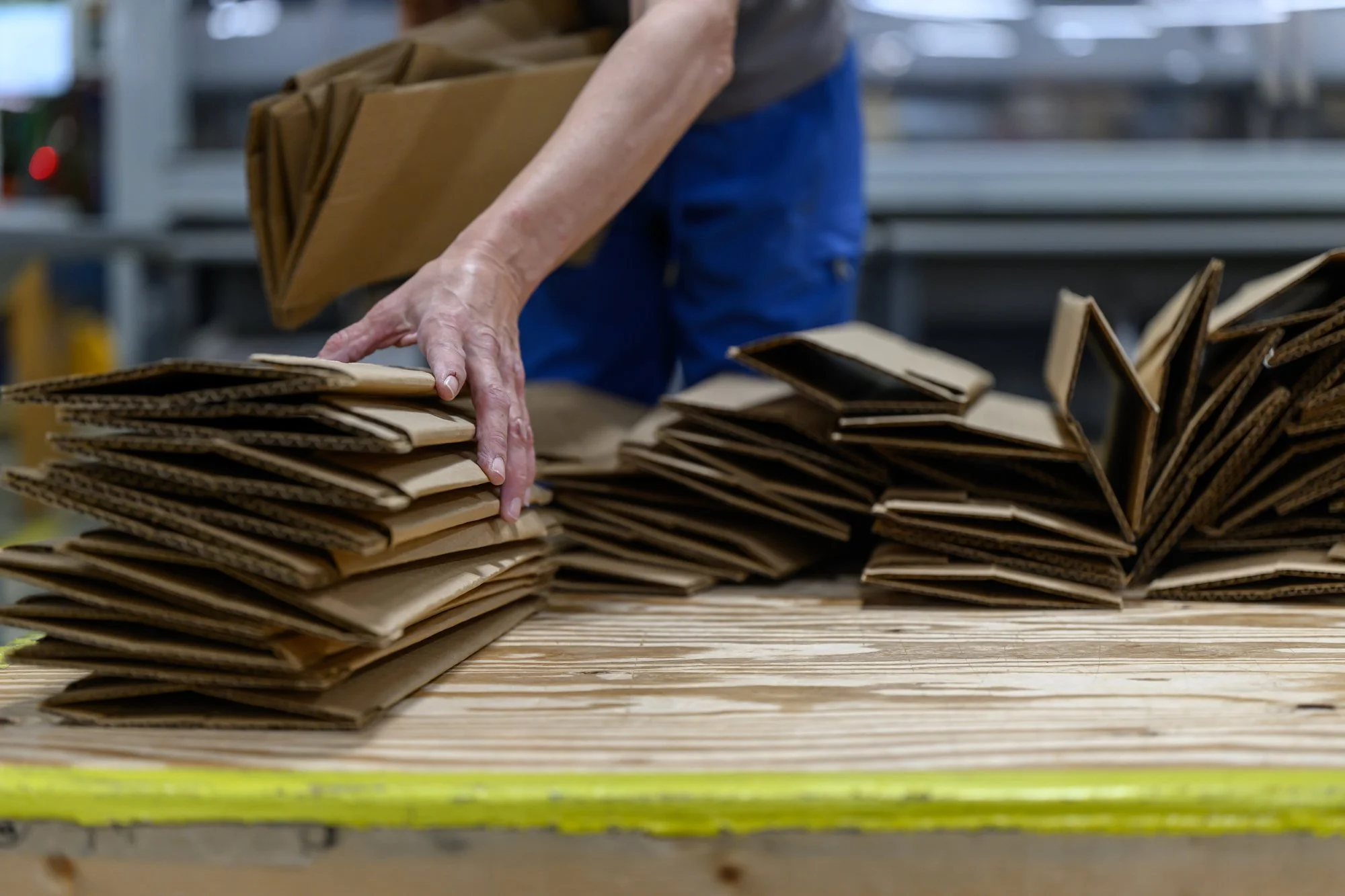
Sarah Carroll lays out pieces she cut and glued up to use in packing the toys. Pack line cuts the cardboard, glues and shapes the boxes, boxes products and labels goods. A surprising amount of manual labor goes into this task which goes largely unnoticed by consumers.
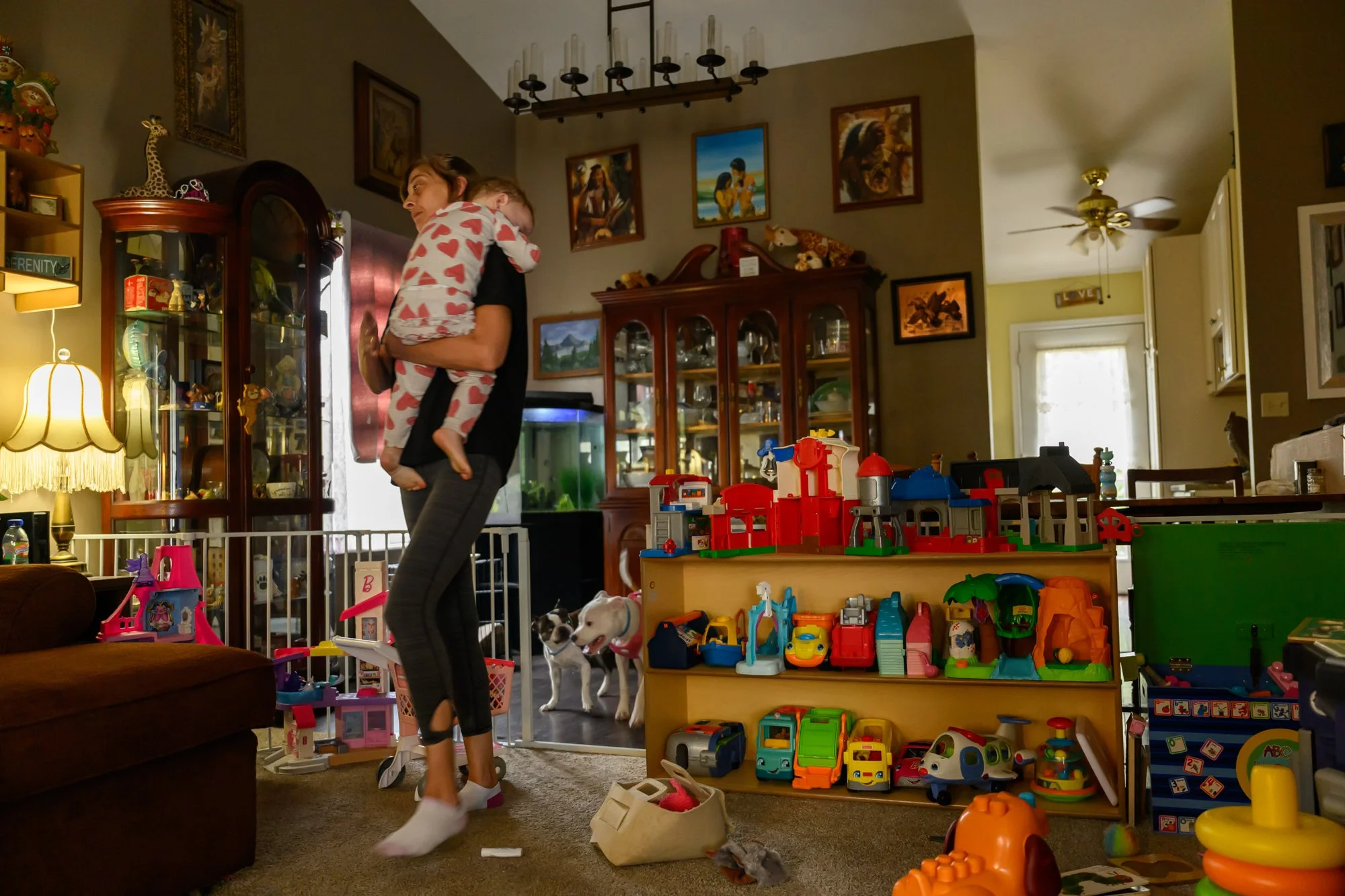
After work many days Sarah watches Mike's granddaughter, Atlas, so Kayle can go to work. Atlas is always with a family member and well loved. Although they are not related by blood, the 22-month-old has known Sarah since birth, and calls her Grandma. The household also includes Sarah’s pittie canine corso mix puppy, Athena, and Mike's boston terrier, Hank, as well as three cats, LA, Tin Tin and Bagheera.
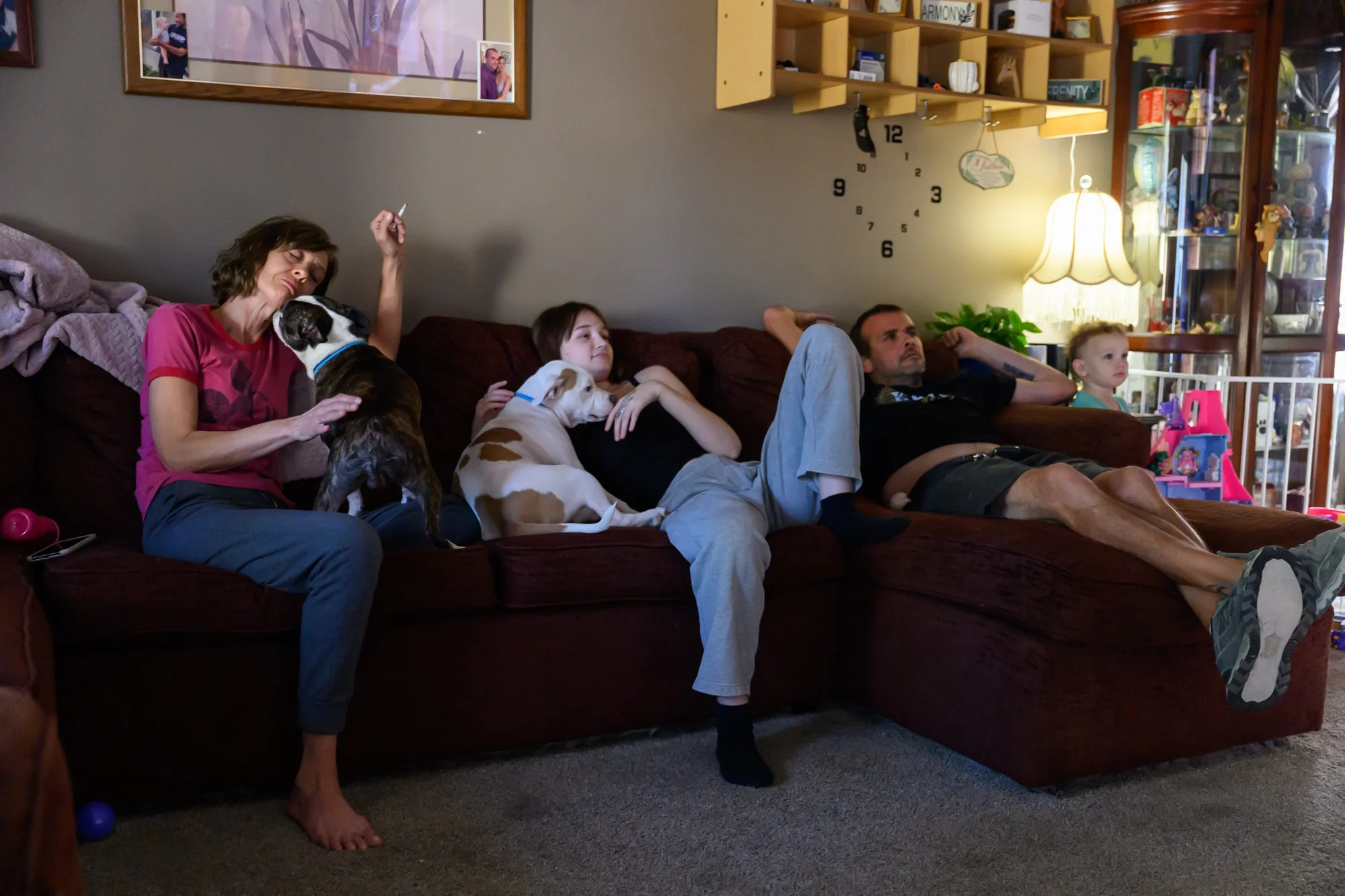
Sarah Carrol rests at home with her boyfriend, Mike and his daughter, Kayle, all of whom live together.

Sarah gets ready for an evening out with Mike after a long day at the factory.
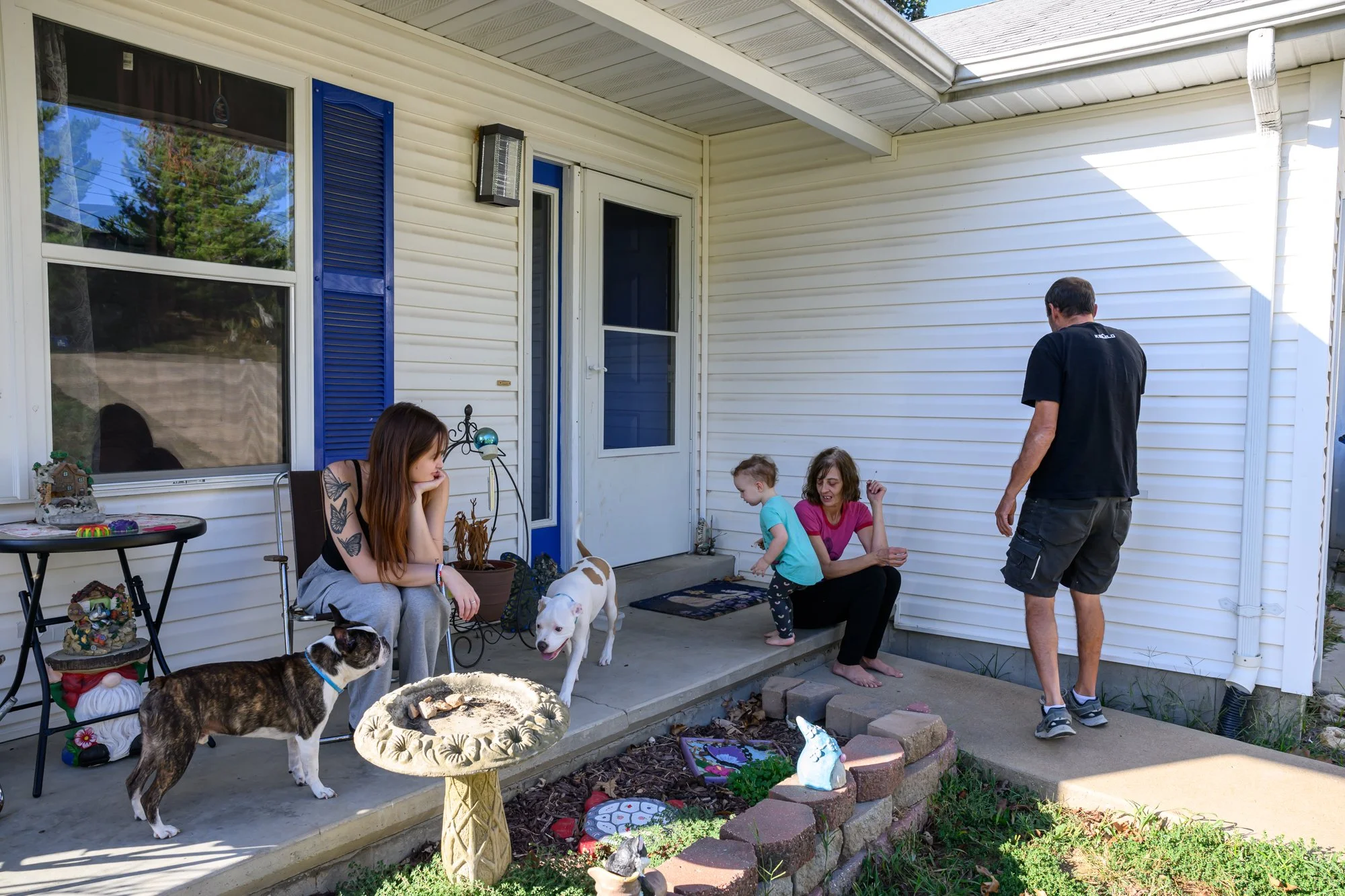
Sarah Carroll and Mike Carylon moved in together last year and his 21-year-old daughter Kayle, Kayle's daughter Atlas, Kayle's boyfriend Noah Mistou and Mike's son Ethan, as well as the pets all live with them. This is more than Sarah initially signed up for but mostly she enjoys the family they have created. Her own daughter and grandchildren are nearby.

Americans often imagine that factories are automated or even manned by robots, but often there are humans doing much of the work. It is physically demanding work but historically these jobs were also stable and well paid. In recent decades US factories cannot compete with the low prices of Asia, and the pay has been declining (compared to other types of work). And tariffs enacted in 2025 have hit US factories (who typically buy materials internationally) hard, and the factories in Union are no exception.